SPH professor publishes papers on health equity for people with IDD��
"I think that there is momentum to make health care better, and I'm excited to continue these partnerships to advance the priorities," says Teal W. Benevides, PhD.


FOCUS
At 51做厙, we harness the power of collaboration every day, and we���re stronger for it. Our interdisciplinary and translational approach to research and scholarship ensures that we are always ready to harness the wisdom and power that comes from our colleagues from all corners of our ever-expanding campus.
As home to the state���s only public medical college and the only dental school, we are infusing the next generation of health care providers with the knowledge to provide the best, most innovative health care to all Georgians, making good on our promise to make Georgia our campus. But it doesn���t stop there. Certainly, our research efforts keep us healthier, but they also keep us safer, better educated, better prepared and better connected to the world we live in.
One of four comprehensive research universities in Georgia, our scientists are dedicated to finding innovative solutions to illness and disease disproportionately affecting our state, including cancer, stroke and heart disease.
Our research makes us stronger, and our collective future is brighter because of it.
DISCOVER
51做厙 is on the forefront of biomedical science with signature basic, clinical, and translational research programs and is also the site for state-of-the-art research and education across computer science, information technology and cybersecurity disciplines.

51做厙 is actively participating in ways to improve the health and lives of the people of our community, our state, and around the world.
Research
51做厙 is involved in nearly 300 different funded research activities and related studies. Research is carried out in both basic and clinical disciplines.
Centers and Institutes
AU���s Center for Undergraduate Research and Scholarship supports research and scholarly activity by undergraduate students. They provide programming and financial support for faculty-student scholarly collaborations through a wide range of services.
Undergraduate Research Programs
Students attending 51做厙 have the opportunity to enhance learning through direct participation in research and scholarship throughout all academic disciplines.
Graduate Research Programs
51做厙 is actively participating in ways to improve the health and lives of the people of our community, our state, and around the world.
Study Recruitment
Together with the Research Institute, serves as a central unit to coordinate and support AU���s Internal and External Sponsored Projects.
Sponsored Program Administration
Cores, or Shared Research Resources are institutionally funded and supported research centers that are dedicated to meeting scientists��� research needs.
Core Labs
Whether with startup, small, medium or large companies, AU is actively marketing and commercializing exciting and promising new technologies, which can change the future for the better.
Office of Innovation and CommercializationRESEARCH FOCUSED
Clinical and translational research programs at 51做厙 focus on three key areas that disproportionately affect the health of Georgians: cancer, cardiometabolic disease, and neurological disease including stroke. We are also developing three emerging areas of research strength: regenerative & reparative medicine, personalized medicine & genomics, and public and preventive health.
Innovating Discoveries
See how the latest in research, innovation and education work together to advance healthcare.
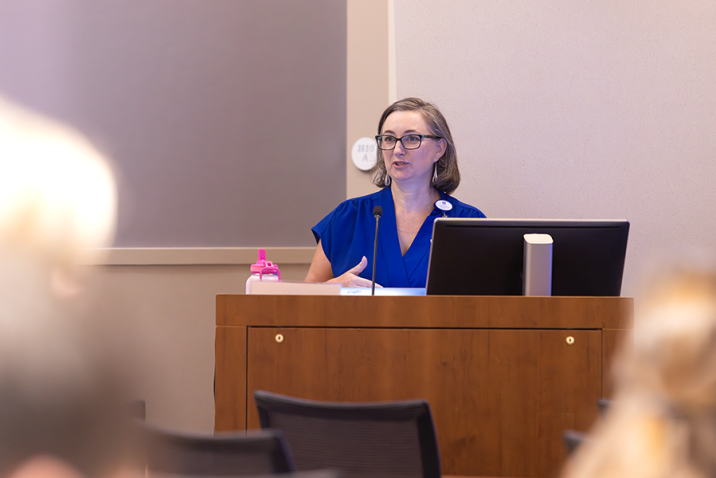
"I think that there is momentum to make health care better, and I'm excited to continue these partnerships to advance the priorities," says Teal W. Benevides, PhD.
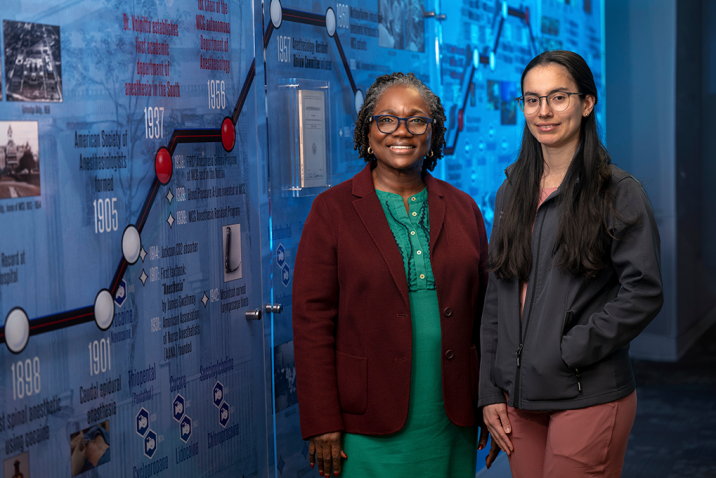
"We saw that patients who live in rural areas were prone to have lower Apgar scores, lower rates of prenatal care and higher rates of preterm delivery," says Bibiana Avella, MD.
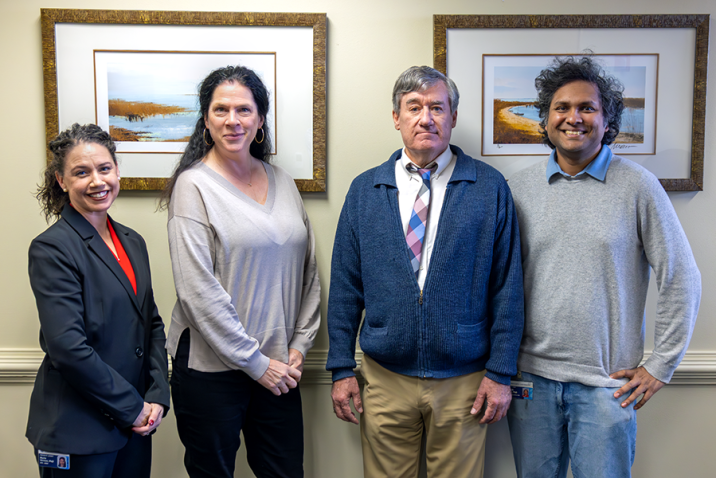
"The study highlights the very high prevalence of CKMS in the adult U.S. population, as well as differences by sex or gender across the lifespan," says Steven Coughlin, PhD.
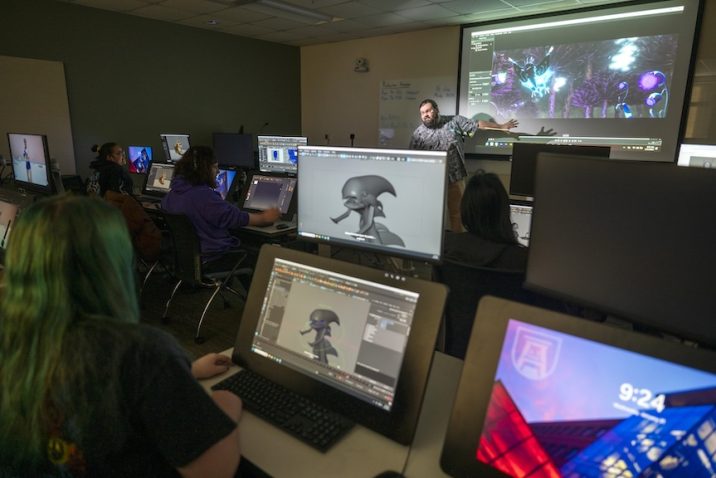
"Students set their own goals, choose their teams and focus on what matters most to them. They often learn more in 48 hours than they would in two weeks in a traditional classroom."